Back in May, I said I was writing a novel and wasn't ready for a formal announcement.
I'm still not ready for a formal announcement. But the book has a name now, and so does the world it's set in. It's probably time for an update.
In this blog post, I'm sharing what has taken shape since spring: the title, the world, the people who helped build it, and where the draft stands.
The Title: Again
The book is called Again.
It's a word about second chances, and also about learning, which is never one-and-done. You learn something, forget it, and learn it again. A community figures out how to live together, loses the thread, and has to figure it out again. That cycle is at the center of the story.
Welcome to Baaham
The novel is set in a community called Baaham. Baaham is a Persian and Urdu word that means "together," and I chose it on purpose. Almost everything in this world comes in pairs: teacher and learner, young and old, people and land, past and present.
The heart of Baaham is the Matching system. Every young person is paired with an older mentor for life. Both of them teach. Both of them learn. Over time, the one who cared for the other becomes the one who is cared for.
The community runs on a belief system called kuri, the Japanese word for chestnut. The chestnut tree feeds people through hard winters and can live for centuries. Kuri's core values are timelessness, sustainability, foresight, and the idea that caring for everyone is everyone's job. When something goes wrong, like a family losing their home in a storm, the community doesn't ask what that family did wrong. It calls for a weaving, a repair process where neighbors of all ages come together to mend the net.
I want to be clear about one thing: this is not a utopia. It's a community of flawed people trying hard to get it right and sometimes failing. I'm more interested in the striving than in perfection.
K and B
The story follows two people the system doesn't seem to work for.
K is fifty and lives alone in a cabin built into a hillside. She was never matched, and she stopped expecting to be. B is younger, still showing up every day at a school she has outgrown, the last of her class waiting for a match that hasn't come.
Then a red light starts blinking.
I'll stop there. I will say that the book alternates between their two voices, with short vignettes in between that tell the story of how Baaham came to be, from the earliest days of survival to the system everyone now trusts without fully understanding.
Bringing People In (For Real This Time)
In May, I said I wanted to bring my own community into the process. I am doing this informally, but I’m getting ready to do something more.
I am planning to host live research events with friends, family, and colleagues, including adults and tweens and teens. We will use a simple design protocol: This Sucks, I Wish, What If. People share what frustrates them about learning, belonging, aging, caregiving, conflict, work, technology, and grief. Then they imagine what could be different.
The vignettes in Again will be built partly from real stories told by people I love. As an education designer, this is the part that feels most like home: designing with people instead of for them.
What's on My Nightstand
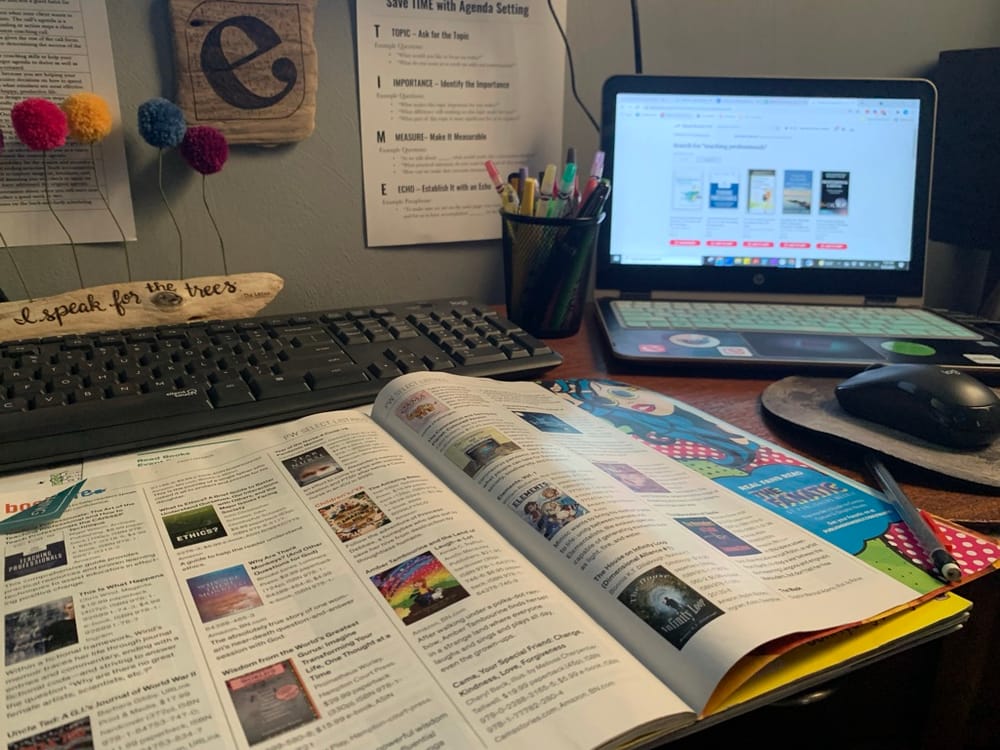
You can't write about teaching and learning without doing some yourself. A few books that are shaping Baaham:
The book opens with Alberto Ríos's poem "A House Called Tomorrow", which says what I'm trying to say better than I can. If you read one thing from this post, read that.
Where Things Stand
Here's an honest progress report. Chapters 1 and 2 are drafted. The first three vignettes are written. Chapters 3 and 4 have openings, and a scene showing a weaving in action is on the page. Next up: building out kuri's language and ceremonies, going deeper into K's past, and writing the Foreword, the part where I explain in my own voice why this book exists.
I'm writing in small, daily chunks. It turns out a novel gets written the same way anything else gets learned: one small step, and then again.
Wrapping Up
In May, I said school is a place, but teaching and learning is something human. Five months in, I'd add that belonging works the same way. It's not something a system gives you. It's something people make together, and sometimes have to make again.
If you'd like to be a reader when the draft is ready, or if you have a story about mentorship, belonging, or being the last one picked, I'd love to hear from you.