A year of work just became something real. TAL-E, an AI-powered experience translator built for adult learners, officially launched after more than a year of development.
I was part of the team that helped bring this to life, and I'm proud of what it represents for learners who have never had tools like this before.
My Role
This was one of my first major projects working directly with AI, transitioning what I already know from assessment design to an automated system.
I worked with Wingspans to develop a set of questions and field-tested the responses with real users, which were used to train the AI tool to be responsive to future interactions.
We analyzed and coded feedback to refine the questions that landed in the final tool, making sure it felt personable, transparent, and accurate for users.
What TAL-E Does
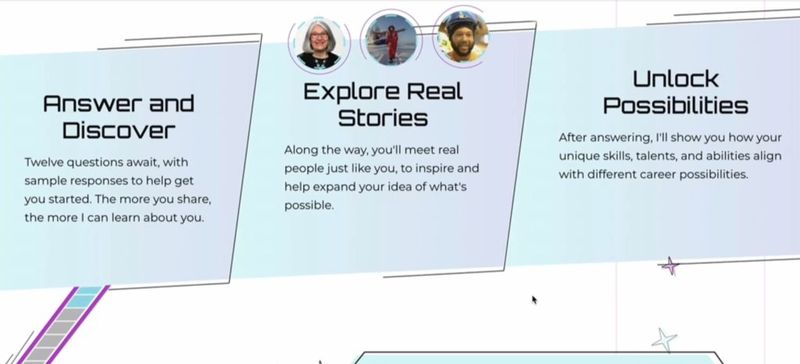
TAL-E stands for "Talents from Experiences." At its core, it helps adult learners translate their lived experiences into skills, tell their story, and match those skills to new careers.
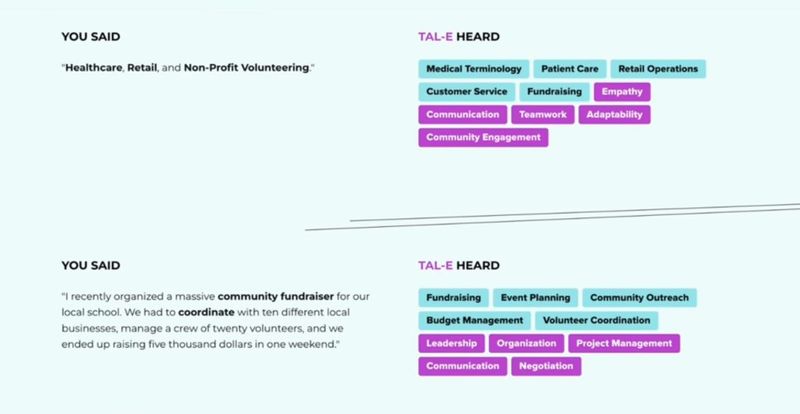
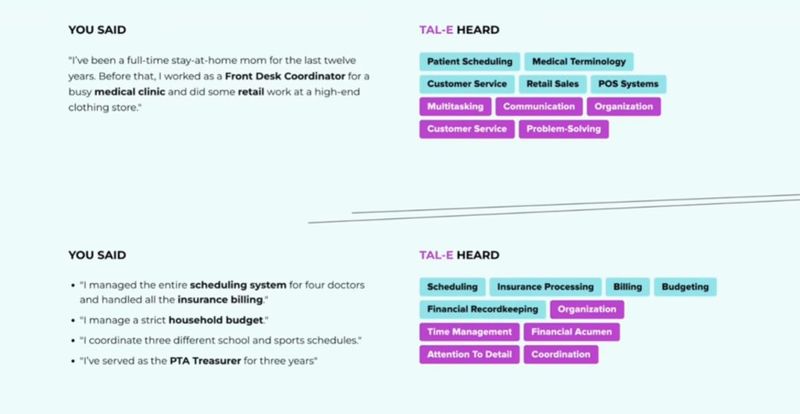
It was built to honor what people already bring to the table. Someone with food service experience can use TAL-E to uncover skills like time management, sanitation, and performing well under pressure, and see how those transfer to healthcare. A single mother working and going to school at the same time can learn to recognize that juggling as a superpower and communicate it to friends, educators, and employers. A veteran can translate their service into workforce language, surfacing strengths like leadership, adaptability, crisis management, and teamwork, and connect those to careers in operations and project management.
The core message is simple: learners don't start from zero. They start from experience.
Why It Matters
There are many tools coming out to help people find their next path, but this one feels different. TAL-E leverages the stories of real people Wingspans has collected over time, giving users information about someone thriving in their career alongside how they would answer the same questions.
It is also transparent at a time when so many AI tools are opaque. For each result, users get a summary stating "What You Said" and "What TAL-E Heard," clarifying how the results were gathered. This layer of respectful transparency is essential in AI-powered tools, and it's something I'm glad we built in from the start.
Who Built It
TAL-E was developed over 1.5+ years in partnership with Calbright College and the Education Design Lab, with funding from the Tools Competition.
The project brought together contributors from Axim Collaborative and a dedicated team at Wingspans who built it out.
What's Next
TAL-E is an exploration and guidance tool. It does not explicitly validate skills or provide credentials.
In future work, I'd like to continue exploring how we might reach levels of accuracy and fidelity in actually validating skills with evidence. That feels like the natural next frontier.
Wrapping Up
TAL-E is a practical tool built around a simple but powerful idea: lived experience has value, and people deserve help communicating that value. This project reflects the kind of work I want to do more of, building things that meet learners where they are and help them move forward.
Adult learners are one of the most overlooked groups in workforce and education design. Tools like TAL-E show what's possible when we design with them, not just for them.
If you're working in adult learning, workforce development, or education design and want to talk about what TAL-E could mean for your work, I'd love to connect.